
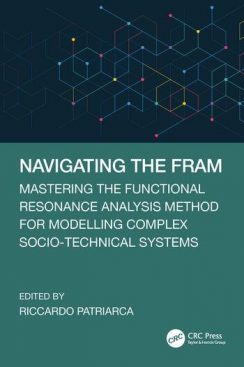
A new book dedicated to the Functional Resonance Analysis Method is now available: Navigating the FRAM: Mastering the Functional Resonance Analysis Method for Modelling Complex Socio-Technical Systems .
The book brings together international perspectives on FRAM, resilience engineering, complex work, performance variability, and the modelling of socio-technical systems.
It provides readers with insights into the foundations, development, interpretation, and application of FRAM across research and practice.
Book Launch Event
The official book launch was organised as an international webinar featuring the editor and selected contributors.
During the webinar, the speakers introduced key ideas from the book and discussed how FRAM can support:
- The modelling and understanding of complex work
- The analysis of performance variability
- The exploration of functional dependencies and interactions
- The understanding and development of resilient performance
- Applications across different industries and socio-technical domains
- The continued methodological development of FRAM
The event also provided an opportunity to reflect on the evolving role of FRAM within resilience engineering and complex systems analysis.
Watch the Launch Webinar
A recording of the book launch is available through the International Ergonomics Association webinar series.
The webinar brings together the editor and contributing experts to present selected perspectives from the book, discuss practical applications, and consider future directions for FRAM research and practice.
https://www.youtube.com/watch?v=yqjivCwE8os&t=11s Watch IEA Webinar #65: Navigating the FRAM
About the Book
Navigating the FRAM explores how the Functional Resonance Analysis Method can be used to model complex socio-technical systems, understand everyday work, examine functional variability, and support resilient performance.
The volume brings together contributions from researchers and practitioners and reflects the continuing development of FRAM across domains, methodological perspectives, and application contexts.
Further information about the book, its contents, contributors, and purchasing options is available from Routledge and CRC Press.
Explore Further Book Information: https://doi.org/10.1201/9781003518167